
 By Dr Rafiqul Islam
Modern systemic cancer therapeutics have transformed oncologic prognoses, extending survival across historically intractable solid and hematologic malignancies. However, this therapeutic revolution has exposed a critical clinical intersection: treatment-induced cardiovascular toxicity. Traditional cytotoxic regimens, targeted biological agents, and immune checkpoint inhibitors (ICIs) impose distinct, often persistent hemodynamic, microvascular, and myocardial burdens.
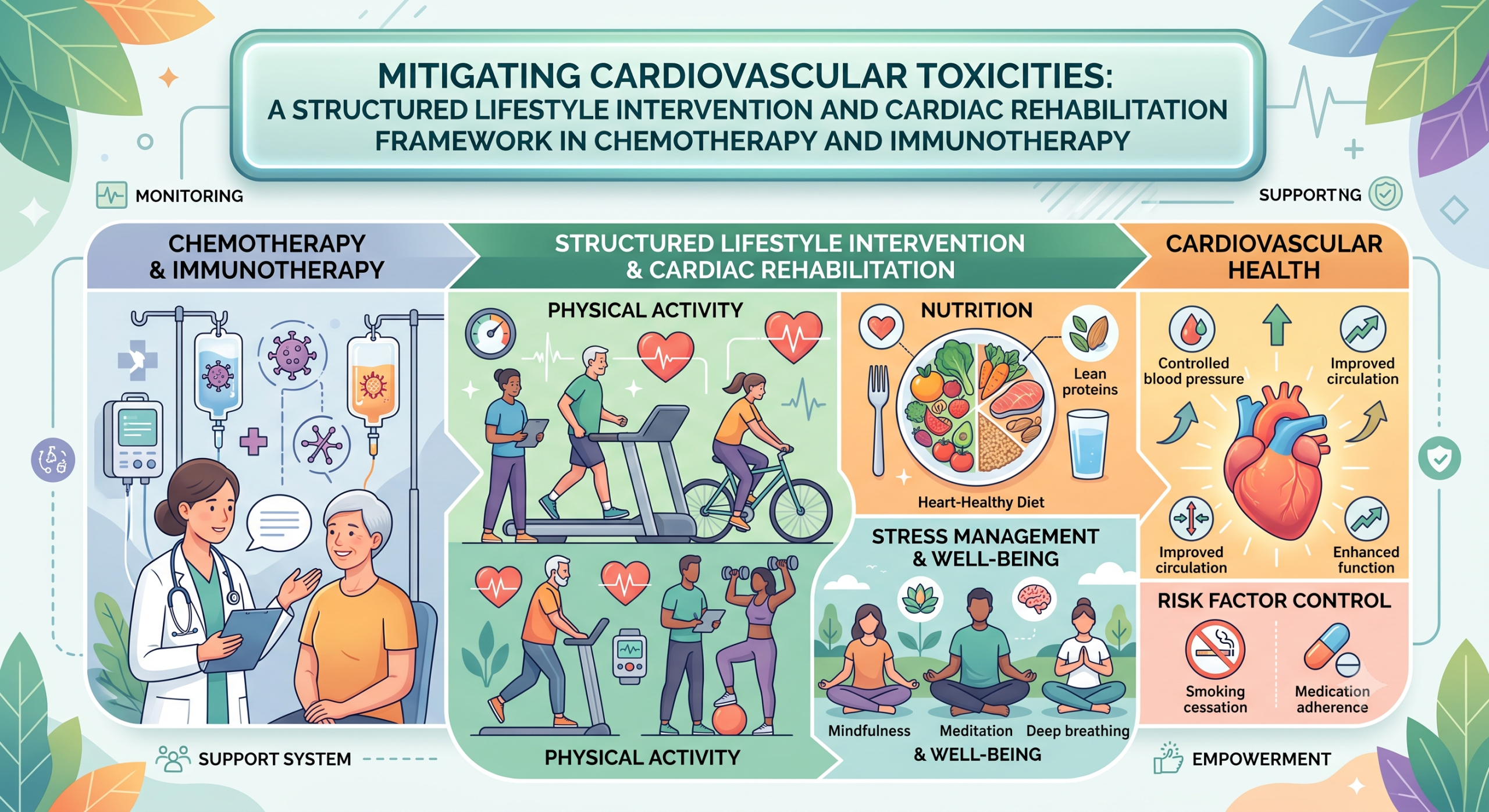
As cancer survivorship expands, cardiovascular disease has emerged as a leading cause of non-oncologic morbidity and mortality among cancer survivors. Mitigating these adverse sequelae demands an evidence-based clinical paradigm that extends beyond reactive pharmacotherapy. Integrating targeted lifestyle interventions with formalized, multidisciplinary cardio-oncology rehabilitation modules provides a physiological shield that preserves cardiorespiratory fitness, attenuates myocardial damage, and optimizes long-term survival.
Mechanisms and Spectrum of Treatment-Induced Cardiotoxicity
Cardiotoxicity manifests across a broad biological continuum dictated by drug class, cumulative dosage, pre-existing comorbidities, and host genetics:
- Anthracyclines (e.g., Doxorubicin, Epirubicin): Induce irreversible Type I cardiotoxicity primarily through topoisomerase IIβ inhibition. This triggers mitochondrial dysfunction, dysregulated iron metabolism, massive generation of reactive oxygen species (ROS), double-stranded DNA breaks, and progressive cardiomyocyte apoptosis, ultimately culminating in left ventricular systolic dysfunction (LVSD) and congestive heart failure.
- Alkylating Agents and Antimetabolites (e.g., Cyclophosphamide, 5-Fluorouracil, Capecitabine): Cyclophosphamide exhibits direct endothelial injury and acute hemorrhagic myopericarditis at high doses. Fluoropyrimidines frequently provoke coronary vasospasms, microvascular endothelial toxicity, acute coronary syndromes, and ischemia-mediated arrhythmias.
- HER2-Targeted Therapies (e.g., Trastuzumab, Pertuzumab): Provoke Type II (largely reversible) cardiomyocyte stunning by disrupting ErbB2/neuregulin survival signaling pathways critical for myocyte repair under hemodynamic stress.
- Immune Checkpoint Inhibitors (e.g., Anti-PD-1/PD-L1, Anti-CTLA-4): Unleash T-cell–mediated immune responses against shared myocardial antigens. Although fulminant ICI myocarditis occurs in less than 1% to 2% of patients, it carries a high fatality rate (25%–50%) characterized by lymphocytic infiltration, severe conduction blocks, arrhythmias, and acute cardiogenic shock. Furthermore, subacute ICI exposure accelerates atherosclerotic plaque progression and microvascular coronary inflammation.
Clinical Architecture of a Dedicated Cardio-Oncology Rehabilitation Module
To counter these multisystem toxicities, a dedicated cardio-oncology rehabilitation module adapts the established four-phase framework of conventional cardiac rehabilitation, tailored specifically to the fluctuating functional trajectories of active cancer care.
Baseline Triage & Stratification ──▶ Phase I: Prehabilitation / Inpatient Care ──▶ Phase II: Active Ambulatory Rehab ──▶ Phase III/IV: Community Maintenance
Phase I: Baseline Risk Stratification and Prehabilitation
Before initiating high-risk chemotherapy or immunotherapy, patients undergo structured baseline cardiotoxicity stratification (incorporating ESC/HFA Cardio-Oncology Risk Assessment guidelines):
- Diagnostic Baseline: Baseline clinical evaluation includes 12-lead electrocardiography (evaluating baseline corrected QT interval, conduction delays), high-precision 2D/3D transthoracic echocardiography with global longitudinal strain (GLS), and baseline serum biomarkers: high-sensitivity cardiac troponin (hs-cTnI/T) and N-terminal pro-B-type natriuretic peptide (NT-proBNP).
- Prehabilitation: Commencing physical conditioning 2 to 4 weeks prior to systemic therapy builds a physiological reserve (“cardiac preconditioning”), enhancing mitochondrial density, skeletal muscle capillary perfusion, and psychological resilience before treatment-related toxicities occur.
Phase II: Active-Treatment Monitored Rehabilitation
Conducted concurrently with chemotherapy infusions or ICI cycles. The clinical focus shifts to maintaining hemodynamic stability, attenuating cardiorespiratory fitness (VO2peak) decline, and monitoring for subclinical cardiotoxicity:
- Session Structure: Outpatient, medically supervised, telemetry-monitored sessions conducted 2 to 3 days per week.
- Biomarker-Driven Triage: Acute surges in troponin, unexplained sustained resting tachycardia (>100 bpm), or a relative drop in GLS >15% from baseline trigger immediate withholding of high-intensity training, urgent cardiology referral, and imaging evaluation to rule out acute myocarditis or systolic failure.
Phase III and IV: Maintenance, Survivorship, and Long-Term Surveillance
Following the completion of systemic therapy, patients transition to autonomous home- or community-based physical activity modules. Long-term surveillance schedules include periodic echocardiography at 6 to 12 months post-treatment and annual cardiovascular risk factor audits to preempt late-onset anthracycline cardiomyopathies, radiation-induced valvular diseases, and accelerated atherosclerotic changes.
Multi-Pillar Lifestyle Intervention Protocols
A high-yield lifestyle intervention framework relies on four interlocked pillars executed systematically throughout the patient’s therapeutic trajectory:
1. Precision Exercise Oncology Prescription
Exercise acts as a targeted systemic countermeasure that reduces circulating inflammatory cytokines (IL-6, TNF-α), upregulates endogenous antioxidant defenses, preserves endothelial nitric oxide synthase (eNOS) activity, and counteracts cancer-related fatigue and sarcopenia.
- Aerobic Conditioning: Moderate-intensity continuous training (MICT) performed at 40%–60% of Heart Rate Reserve (HRR) or Rating of Perceived Exertion (RPE) 12–14 (Borg scale), accumulating 150 minutes weekly. For clinically stable patients, monitored High-Intensity Interval Training (HIIT) (e.g., 4 × 4-minute intervals at 85%–90% peak heart rate) can elicit superior restorations in VO2peak without compromising left ventricular ejection fraction.
- Resistance Training: 2 to 3 days per week targeting major muscle groups (1–3 sets of 8–12 repetitions at 60%–70% of 1-Repetition Maximum). Preserving skeletal muscle cross-sectional area preserves the peripheral muscle pump, preventing chemotherapy-induced sarcopenic obesity and orthostatic deconditioning.
- Safety Hold Parameters: Exercise must be deferred or modified if absolute neutrophil count (ANC) is <0.5×10⁹/L, platelets are <50×109/L (avoid high-resistance or impact loading), resting blood pressure exceeds 180/100 mmHg, or active febrile systemic illness is present.
2. Cardioprotective Nutritional Interventions
Nutritional strategies prioritize anti-inflammatory profiles and vascular preservation:
- The Mediterranean Dietary Pattern: Rich in unrefined polyunsaturated fatty acids (PUFAs), polyphenols, and soluble fiber. High adherence mitigates lipid peroxidation, reduces vascular cell adhesion molecule-1 (VCAM-1) expression, and stabilizes metabolic profiles.
- Macronutrient Optimization: Ensuring adequate, high-biological-value protein intake (1.2 to 1.5 g/kg/day) to attenuate cancer cachexia and myofibrillar breakdown.
- Sodium and Glycemic Modulation: Restricting dietary sodium (<2,000 mg/day) mitigates subclinical fluid retention during corticosteroid pre-medications and anthracycline-induced ventricular stress.
3. Metabolic and Vascular Risk Control
Aggressive primary management of modifiable cardiovascular parameters prevents synergistic damage:
- Hypertension Management: Target resting blood pressure <130/80 mmHg. ACE inhibitors, ARBs, and cardioselective beta-blockers (such as carvedilol or nebivolol) represent first-line pharmacotherapies due to demonstrated cardioprotective efficacy against anthracycline free-radical injury and trastuzumab-mediated left ventricular decline.
- Lipid and Glycemic Profiling: Early initiation of statin therapy provides lipid-independent pleiotropic benefits, including attenuation of cardiomyocyte oxidative stress, inhibition of vascular smooth muscle proliferation, and preservation of microvascular function.
4. Neurohormonal and Autonomic Modulation
Chemotherapeutic agents often induce severe autonomic dysfunction characterized by sustained sympathetic overdrive, blunted heart rate variability (HRV), and orthostatic intolerance:
- Behavioral and Somatic Interventions: Structured mind-body therapies, including diaphragmatic breathing protocols, progressive muscle relaxation, and mindfulness-based stress reduction (MBSR), systematically shift autonomic balance toward parasympathetic dominance, lowering baseline vascular tone and mitigating treatment-related anxiety.
Implementation Challenges and Future Directions
Despite robust clinical evidence demonstrating that cardiac rehabilitation preserves cardiorespiratory fitness and reduces hospital readmissions in oncology, systemic barriers restrict widespread implementation. Referral infrastructure remains fragmented; oncology clinicians frequently lack dedicated pathways to order specialized exercise prescriptions, and third-party reimbursement models regularly fail to cover cardiac rehabilitation for cancer diagnoses lacking overt heart failure.
Addressing these deficits requires the establishment of formalized Cardio-Oncology-Rehabilitation (CORE) clinical pathways. Integrating clinical trial designs that evaluate digital health tools—including wearable telemetry sensors, continuous heart rate trackers, and decentralized telerehabilitation platforms—can bridge geographical and logistical divides.
Systematically embedding structured lifestyle interventions and cardiac rehabilitation modules within frontline oncology care ensures that therapeutic successes against cancer are not undermined by preventable cardiovascular impairment, ultimately translating clinical survivorship into durable, functional longevity.
Leave A Comment