Breast Cancer Treatment
- Home
- Breast Cancer Treatment

Personalized breast cancer treatment planning based on diagnosis, stage, and tumor biology.
Breast cancer is one of the most common cancers affecting women. Early detection through regular screening, proper diagnosis, and appropriate treatment planning is critical for better outcomes.
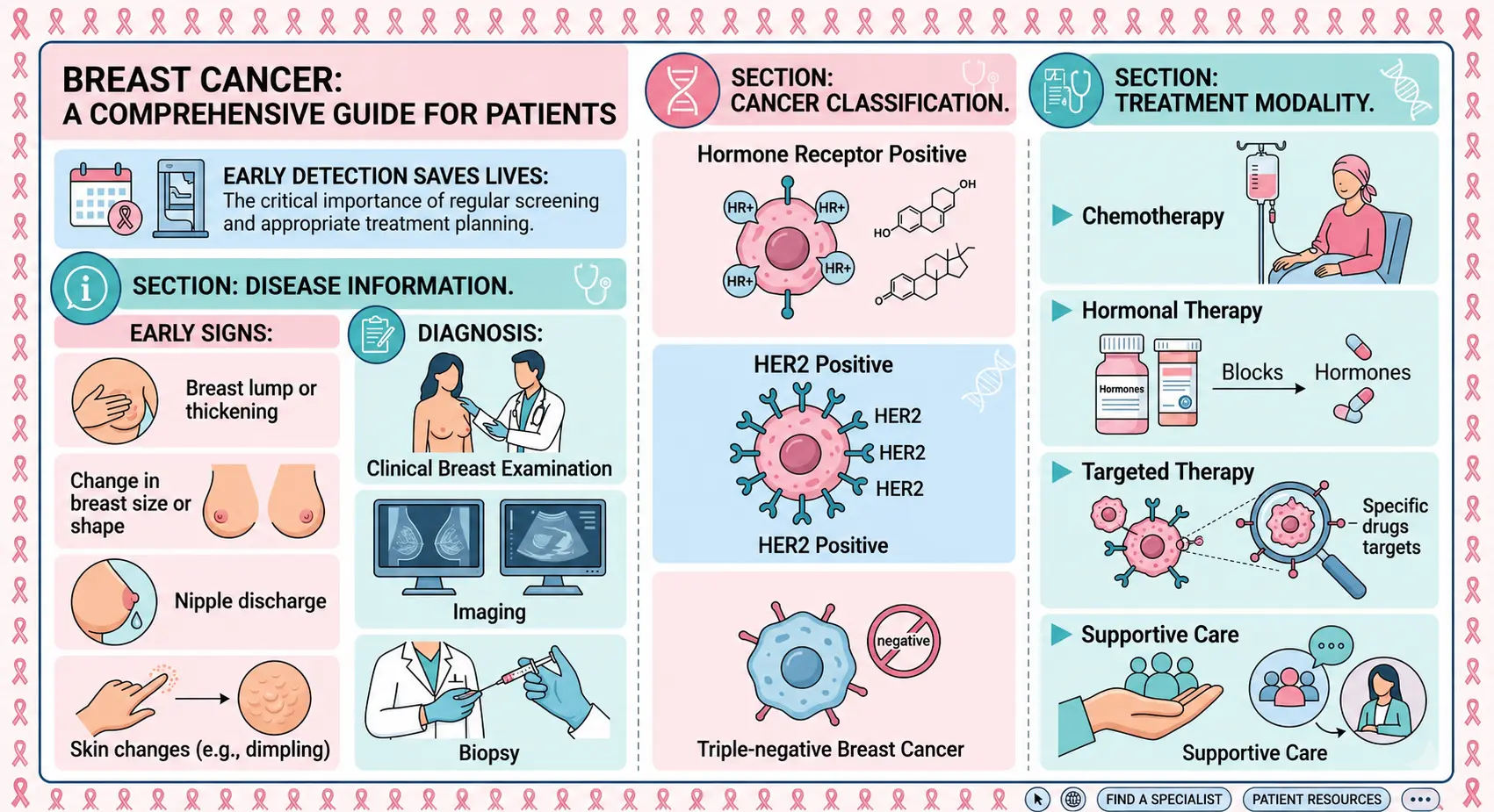
Overview
Breast cancer occurs when abnormal cells grow in breast tissue. Treatment decisions depend on the type of breast cancer, stage, hormone receptor status, HER2 status, patient age, overall health, and treatment goals.
A specialist oncology evaluation helps patients understand the diagnosis, required tests, treatment sequence, and available systemic therapy options.
Early Signs
- ‣ Breast lump or thickening
- ‣ Change in breast size or shape
- ‣ Nipple discharge
- ‣ Skin changes
- ‣ Nipple changes
- ‣ Swelling or persistent discomfort
Diagnosis & Evaluation
Breast cancer diagnosis may involve clinical breast examination, mammography, ultrasound, biopsy, pathology review, and receptor testing. Understanding the biological subtype of breast cancer is essential for treatment planning.
Classification
Breast cancer may be classified into different groups, including:
- ‣ Hormone receptor positive breast cancer
- ‣ HER2 positive breast cancer
- ‣ Triple-negative breast cancer
Each category may require a different treatment strategy.
Treatment & Care Options
Treatment may include surgery, chemotherapy, radiotherapy, hormonal therapy, targeted therapy, immunotherapy, and supportive care. The treatment sequence may vary depending on stage and tumor biology.
Dr. Rafique helps patients understand systemic treatment options, coordinate care with other specialists, and plan long-term follow-up.
Dr. Rafique’s Approach
- ‣Patient-specific treatment planning
- ‣Receptor-based treatment strategy
- ‣Chemotherapy and systemic therapy guidance
- ‣Targeted and hormonal therapy evaluation
- ‣Supportive care during and after treatment
FAQs
What is the first step after a breast cancer diagnosis?
The first step is specialist review of biopsy, imaging, receptor status, and staging information.
Are all breast cancers treated the same way?
No. Treatment depends on cancer stage, hormone receptors, HER2 status, and patient factors.
Is chemotherapy always needed?
Not always. Some patients need chemotherapy, while others may need hormonal therapy, targeted therapy, surgery, or radiotherapy depending on evaluation.
Why is receptor testing important?
Receptor testing helps guide treatment options such as hormonal therapy or HER2-targeted therapy.
Need expert breast cancer treatment planning?
If you or a family member has been diagnosed with breast cancer, book a consultation with Dr. Muhammad Rafiqul Islam for a personalized treatment planning review.
