Palliative and Supportive Care
- Home
- Palliative and Supportive Care

Compassionate care focused on comfort, dignity, symptom relief, and quality of life.
Palliative and supportive care helps manage symptoms, discomfort, emotional distress, and quality-of-life challenges during cancer treatment or advanced disease management.
Overview
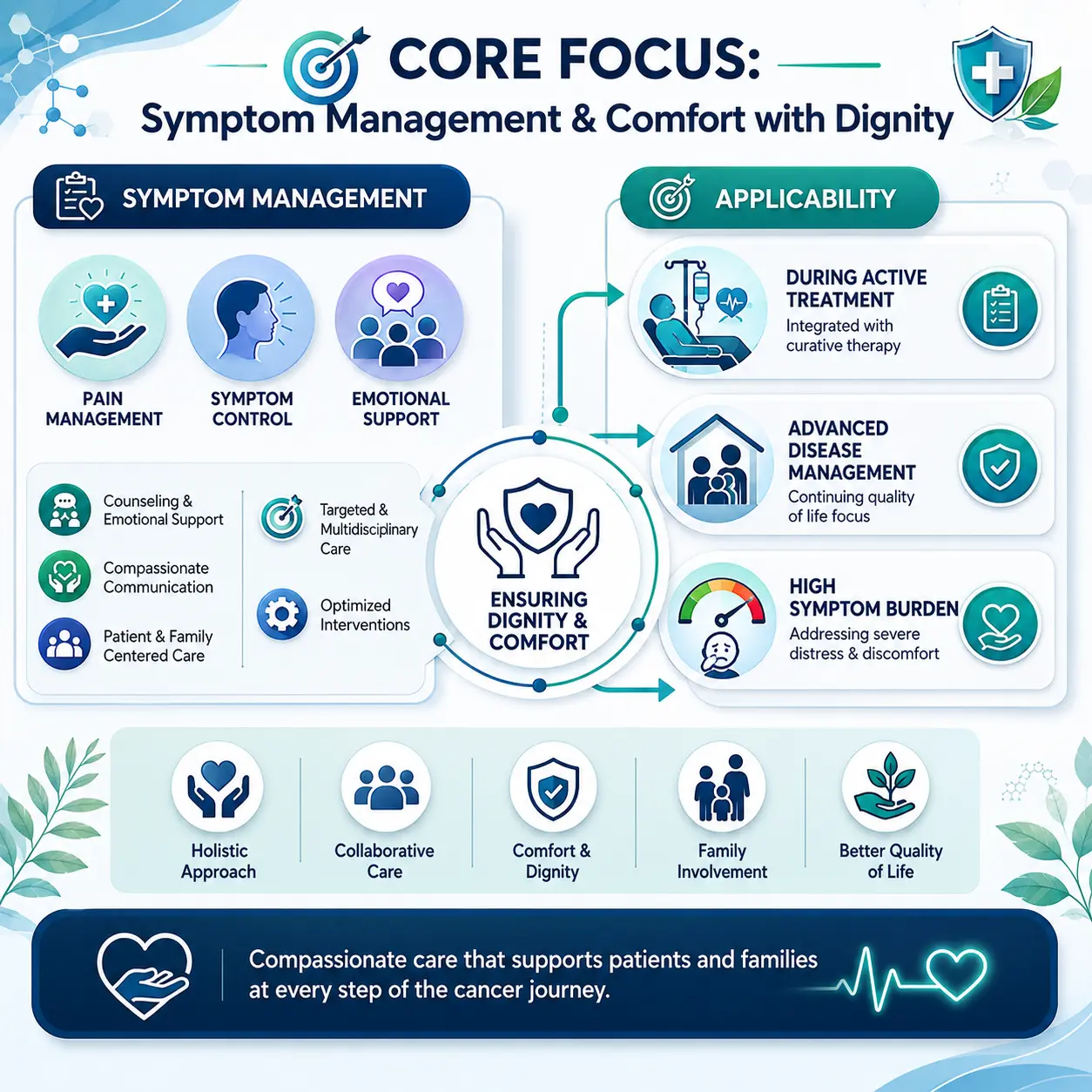
Palliative care does not mean giving up. It is a patient-centered approach that focuses on relief from pain, symptoms, stress, and treatment-related discomfort. It can be provided during active treatment, advanced disease management, or when symptom burden is high.
Supportive care helps patients and families manage physical, emotional, and practical challenges throughout the cancer journey.
Key Areas
- ‣ Pain management
- ‣ Symptom control
- ‣ Emotional support
- ‣ Treatment side effect support
- ‣ Family guidance
- ‣ Comfort and dignity
When It Is Helpful
Palliative and supportive care may be helpful:
- ‣ During active cancer treatment
- ‣ In advanced disease management
- ‣ When symptoms are difficult to control
- ‣ When treatment side effects affect daily life
- ‣ When patients and families need emotional support
- ‣ When quality of life is a major priority
Care Options
Care may include pain assessment, symptom management, nausea control, fatigue support, breathing difficulty support, appetite and nutrition guidance, emotional counseling support, and family-centered communication.
Dr. Rafique’s Approach
- ‣ Compassionate symptom-focused cancer care
- ‣ Comfort and dignity as central priorities
- ‣ Support during active or advanced cancer care
- ‣ Family-sensitive communication
- ‣ Integrated supportive oncology planning
FAQs
Is palliative care only for end-stage cancer?
No. Palliative care can support patients at different stages of cancer, including during active treatment.
Can palliative care be given with chemotherapy?
Yes. Supportive care may be provided alongside active cancer treatment to improve comfort and quality of life.
What symptoms can be managed?
Pain, fatigue, nausea, breathing difficulty, appetite issues, emotional distress, and treatment-related discomfort may be addressed.
Does palliative care help families?
Yes. It helps families understand care goals, symptom support, and practical decision-making.
Need treatment planning?
Need cancer treatment planning? Book a consultation with Dr. Muhammad Rafiqul Islam for specialist review and personalized care guidance.
