
 By Dr Rafiqul Islam
Understanding lung cancer in women requires looking beyond smoking alone. Emerging data highlights how female-specific reproductive, hormonal, and metabolic factors compound overall risk.
Key takeaways from this multivariate analysis focusing on female risk factors:
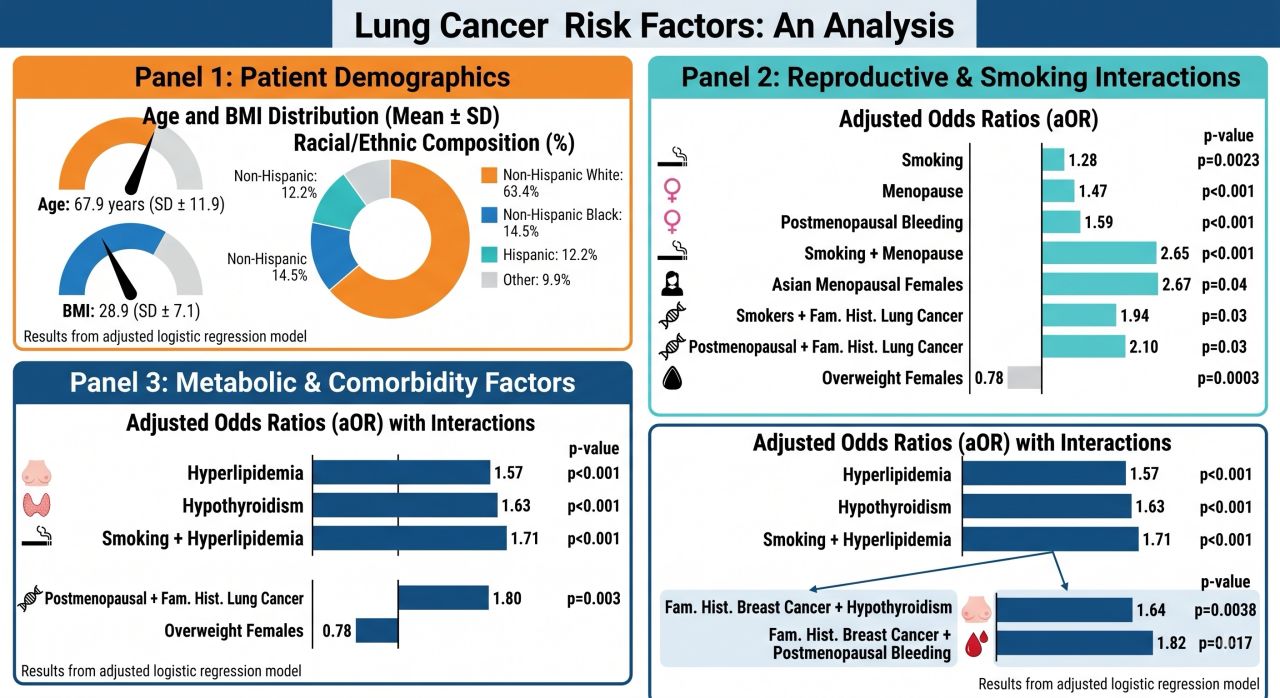
Hormonal & Reproductive Impacts: Combining smoking with menopause significantly elevates risk (aOR = 2.65, p<0.001) compared to smoking alone (aOR = 1.28). Postmenopausal bleeding (aOR = 1.59) and menopausal status in Asian females (aOR = 2.67) also showed marked associations.
Metabolic Indicators: Conditions like hypothyroidism (aOR = 1.63) and hyperlipidemia (aOR = 1.57) independently correlate with increased risk, while smoking combined with hyperlipidemia pushes the odds ratio to 1.71.
Familial Multipliers: Risk multiplies when a family history of lung cancer interacts with postmenopausal status (aOR up to 2.10). Additionally, a family history of breast cancer combined with postmenopausal bleeding showed an aOR of 1.82.
Incorporating female reproductive history and metabolic health into clinical screening models is essential for early detection and personalized prevention strategies.
How can healthcare systems better incorporate gender-specific risk factors into routine lung cancer screening?
Leave A Comment